
Blue Session brings experts together around the coast of tomorrow


Sustainable coastal management is becoming an increasingly important priority. Climate change, sea level rise, biodiversity loss and the protection of critical infrastructure call for new solutions as well as closer cooperation between different stakeholders.
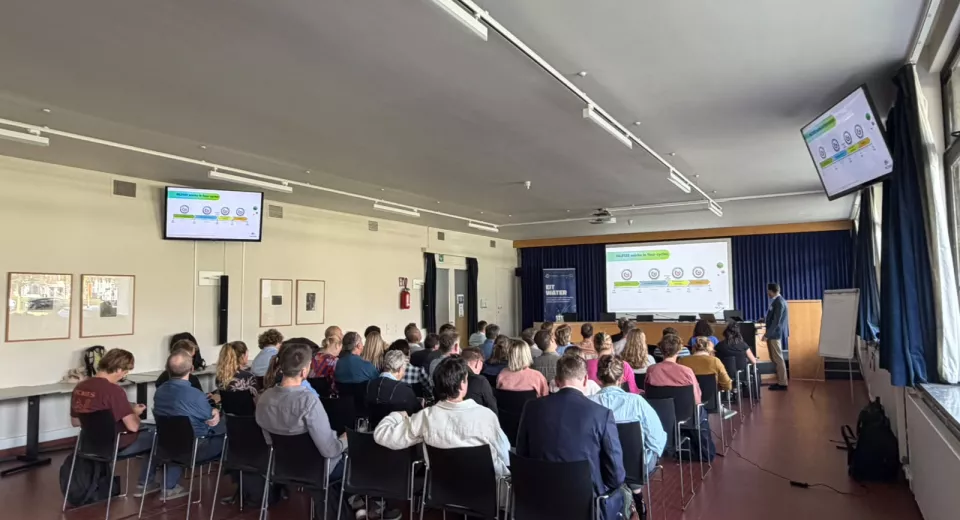
The Blue Session therefore brought together expertise from various domains to exchange knowledge, share experiences and explore new avenues for innovation. Through inspiring presentations, a panel discussion and interactive workshops, participants not only reflected on what is already possible today, but also looked ahead to new opportunities for innovation and collaboration.
Nature as a partner for the coast of tomorrow
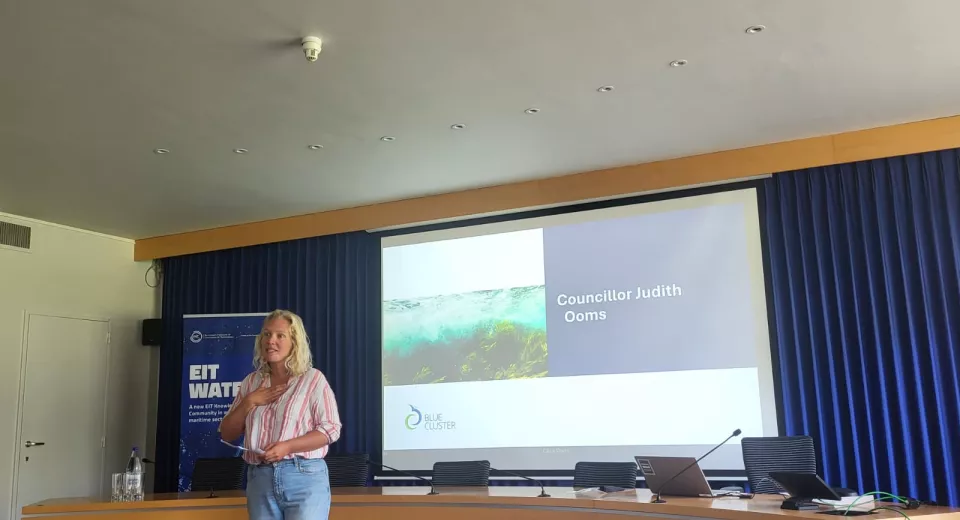
The afternoon was opened by Alderman Judith Ooms, who emphasised the importance of cooperation and innovation for the future of the coast and provided insight into several projects in the pipeline for the City of Ostend. This message resonated throughout the entire afternoon.
Drawing on Dutch experiences from the NL2120 programme, participants saw how nature-based solutions can evolve from local experiments into large-scale applications with societal impact. One key insight emerged: sustainable coastal development requires a different way of thinking, where nature is no longer merely a condition to be met, but an active partner in design, protection and development.
From nature-based solutions to a broader ecosystem approach
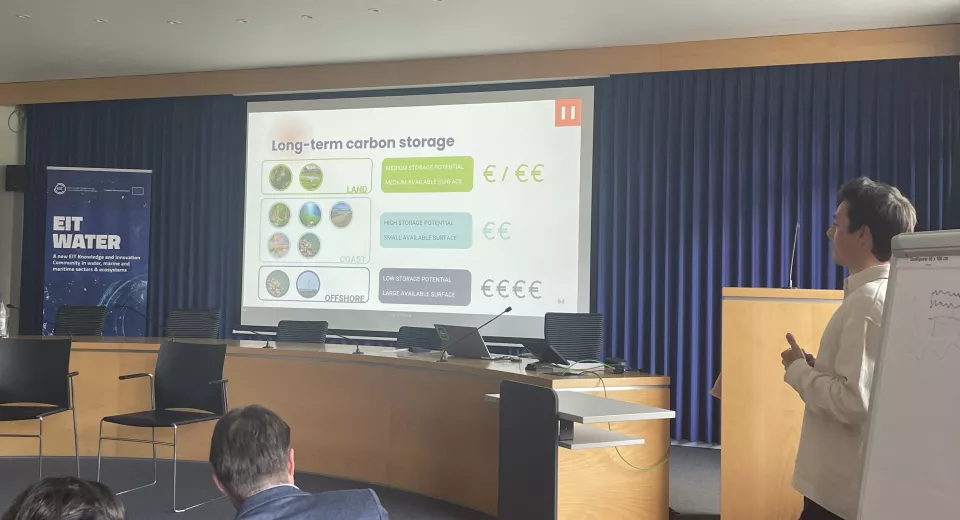
An important conclusion of the Blue Session was that sustainable coastal management extends far beyond the beach and coastal zone alone. During the roadmap update, it was confirmed that themes such as ecosystem engineering, marine ecosystem restoration, carbon sequestration and nature-inclusive infrastructure deserve a prominent place within future innovation activities.
Participants clearly recognised that nature-based solutions will continue to play an important role. At the same time, there was growing awareness that the challenge is larger than any single type of solution. Future coastal management requires an integrated ecosystem approach in which safety, the economy, nature, climate adaptation and spatial development are considered together.
Enthusiasm to move from knowledge to action
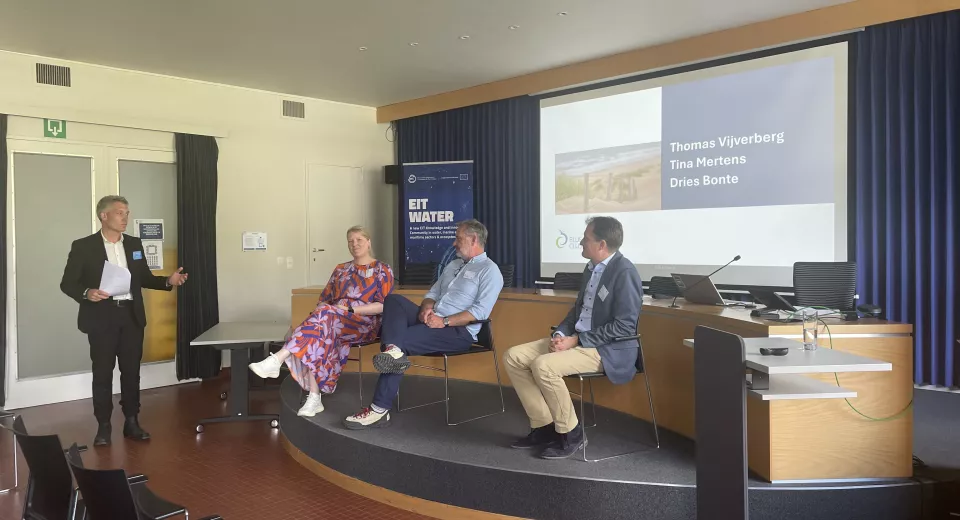
During the panel discussion, reference was repeatedly made to the strong enthusiasm currently present in Flanders. Both researchers and public authorities see opportunities to translate existing knowledge into concrete projects. Several coastal municipalities are already taking inspiring actions, and the City of Ostend, among others, stands ready to actively experiment.
A recurring theme was the need to avoid remaining focused solely on knowledge development. Participants stressed the importance of pilot projects, demonstrations and tangible achievements that showcase what works. Knowledge is already available, but the challenge increasingly lies in implementation, scaling up and embedding solutions within society.
Sharing knowledge, telling stories and embracing uncertainty
A second key message concerned the importance of communication. Several speakers pointed out that uncertainty is inherent in working with natural systems, but should not be a reason for inaction. The challenge is to better understand these uncertainties, monitor them and communicate about them transparently.
The importance of knowledge sharing and storytelling was therefore also highlighted. Inspiring examples, practical experiences and lessons learned from pilot projects need to be made more visible so that policymakers, businesses and citizens gain confidence in new solutions. Sharing insights, for example through communication about practical cases and learning trajectories, can play an important role in this regard.
New opportunities at the intersection of nature and infrastructure
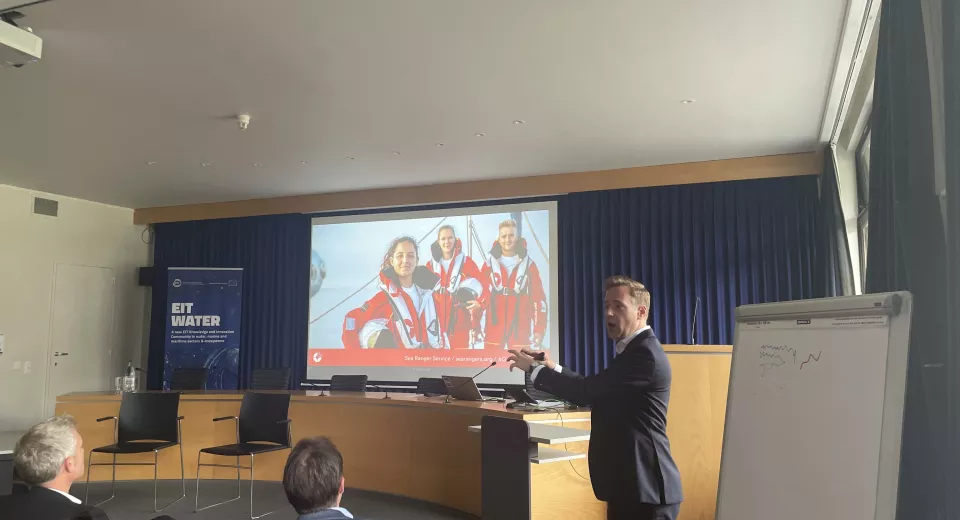
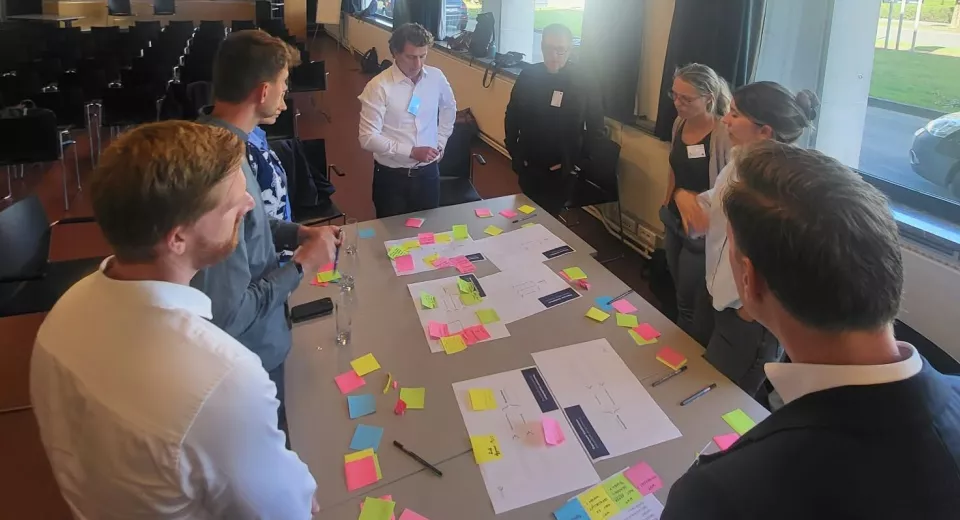
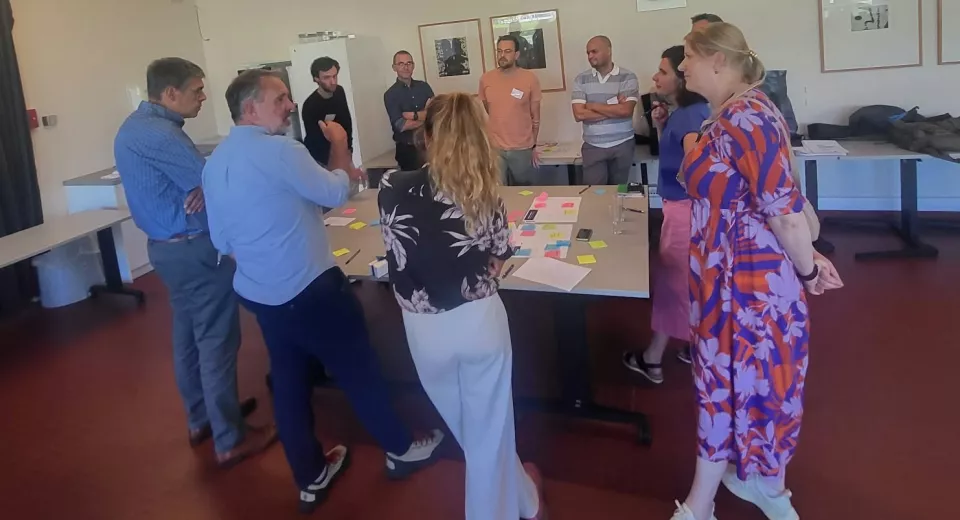
The workshops focused specifically on an emerging field of innovation: nature-based solutions for the protection of critical infrastructure. Participants explored how nature should not only be protected, but can itself play a protective role for ports, cables, energy infrastructure and coastal defences.
The concept of “Two Agendas, One Sea”, in which ecological and security objectives reinforce one another, generated considerable interest and inspired new project ideas. Many participants regarded this theme as a promising new direction for future innovation projects, where economic interests, security and nature development can mutually strengthen one another.
What comes next?
The input from the panel discussion and workshops will be used in the coming months to further refine and develop the Sustainable Coastal Management roadmap. The updated roadmap will reflect a broader vision of coastal management, with greater emphasis on ecosystem approaches, marine ecosystem restoration, blue carbon, nature-inclusive design and the interaction between nature and infrastructure.
In addition, Blue Cluster calls on all interested organisations to actively contribute project ideas and help build a broad coalition of organisations willing to work together on the future of our coast. Innovation does not emerge on paper, but through cooperation between businesses, knowledge institutions and public authorities that are prepared to test new ideas in practice.
Final conclusion
The Blue Session confirmed that the necessary support, knowledge and enthusiasm are in place. The challenge for the coming years is to convert that energy into concrete projects that contribute to a safe, nature-positive and future-proof coast. Follow us for the next steps in the further development of the roadmap and upcoming project calls.