
Strategic autonomy takes centre stage at Great Flemish Europe Debate


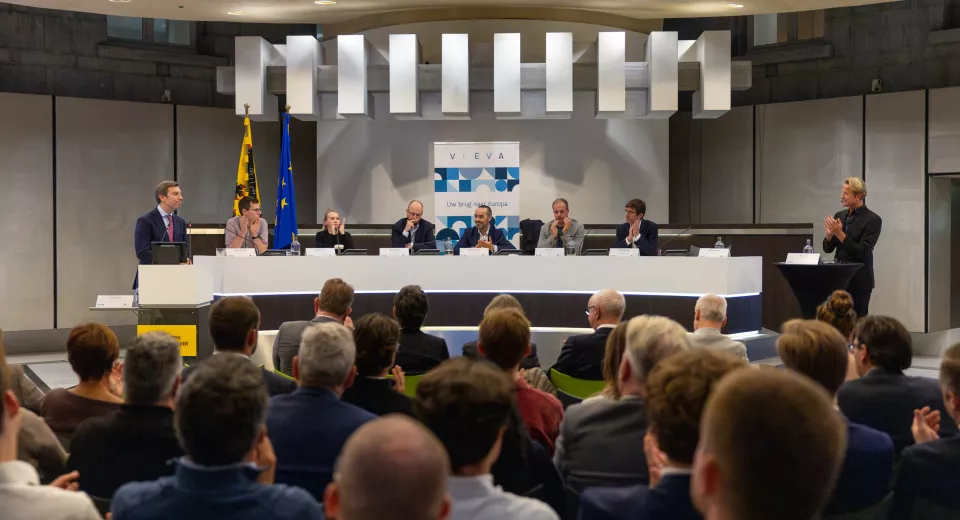
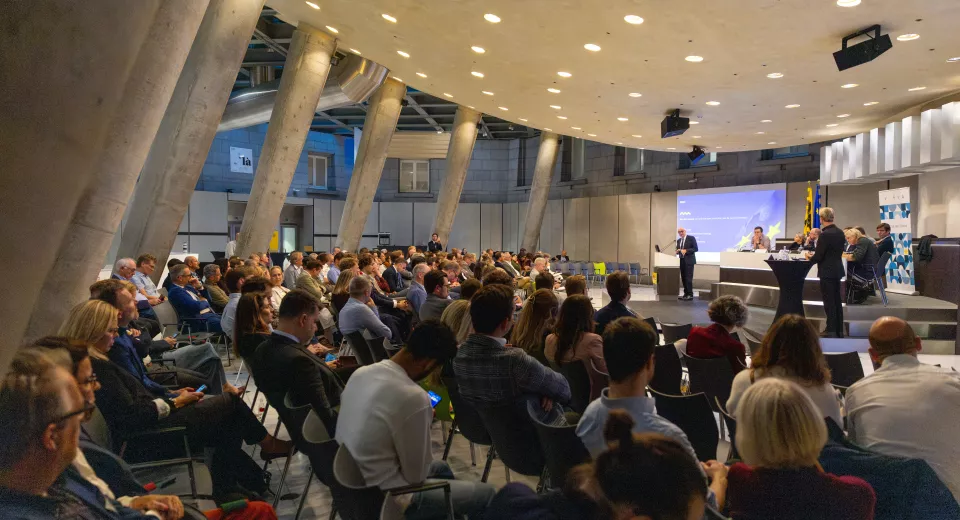
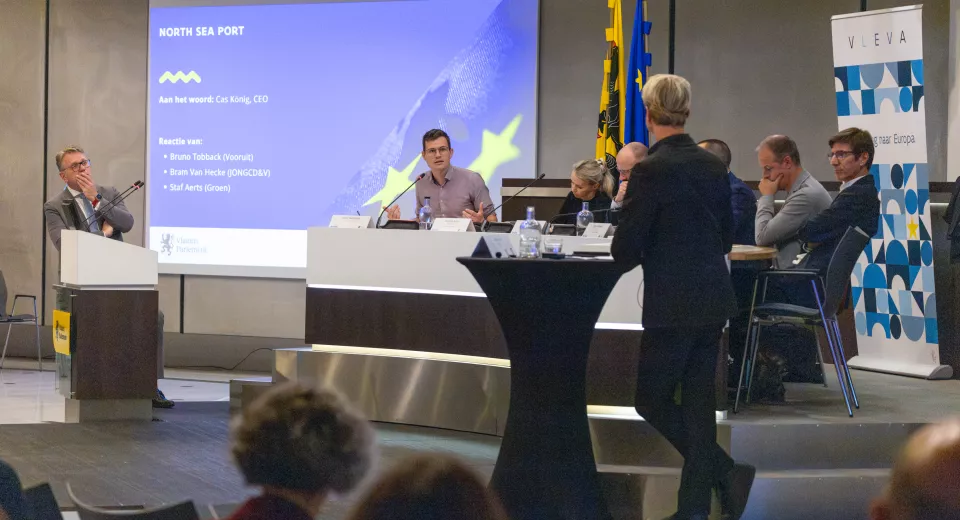
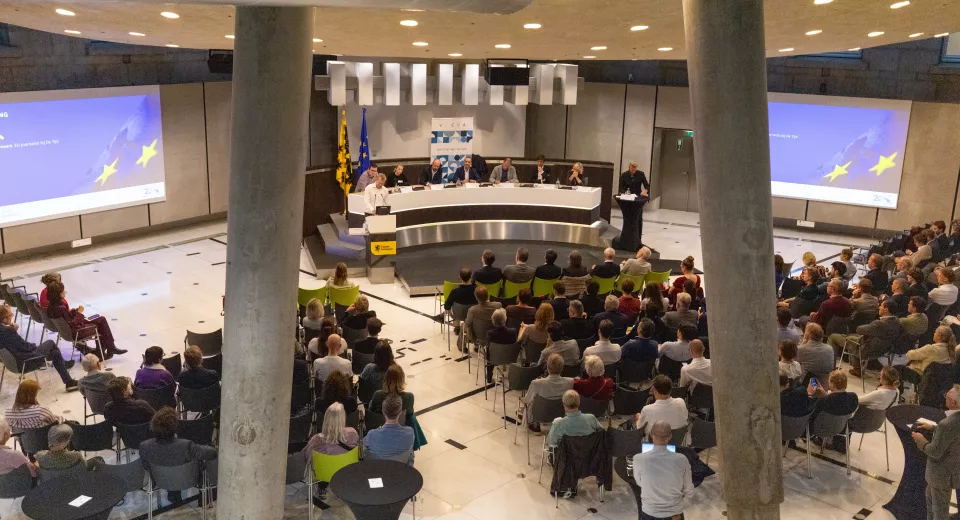
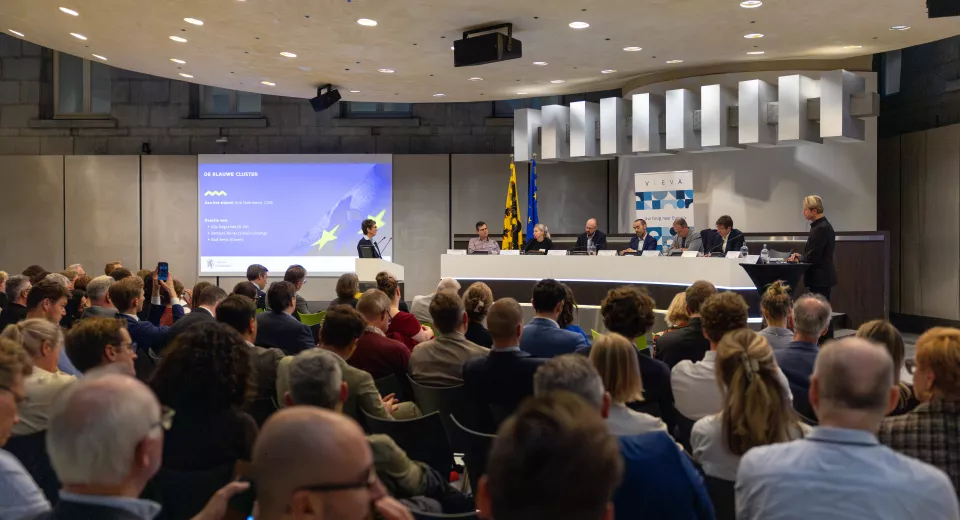
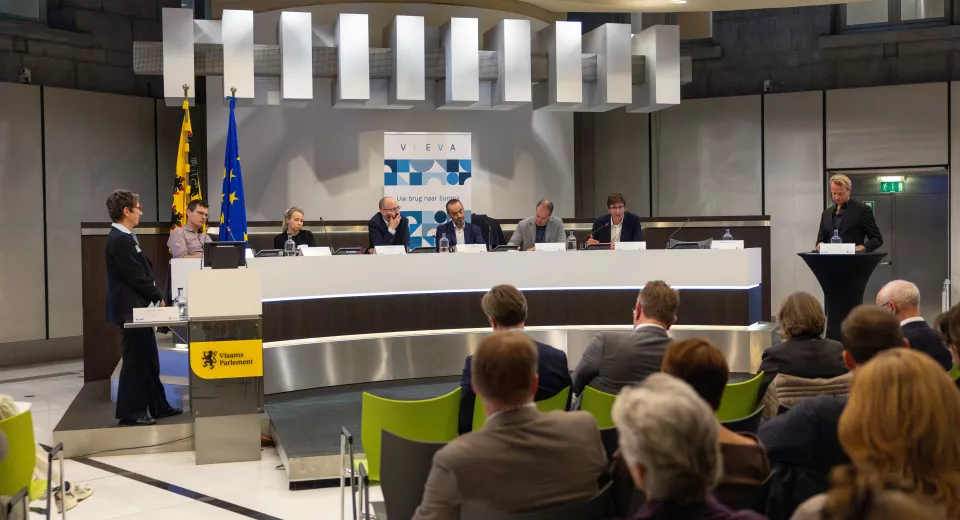
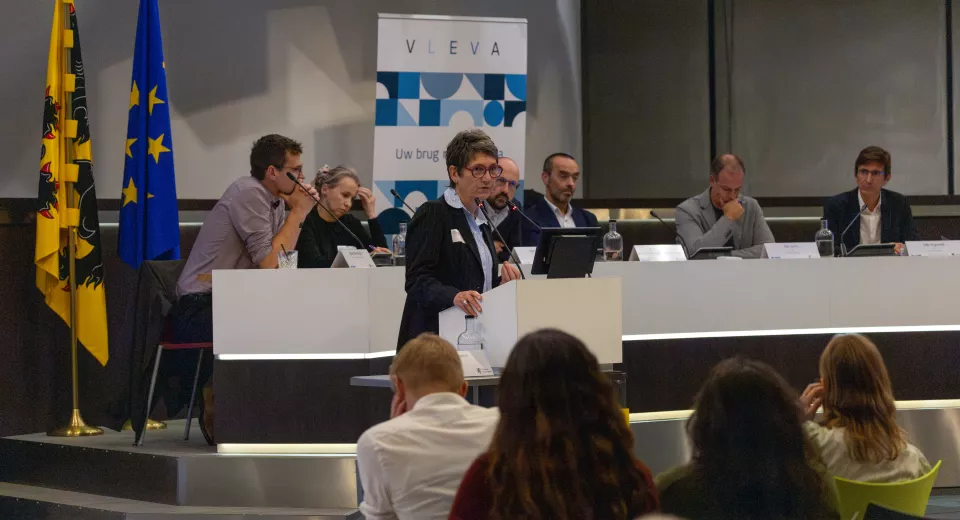
On 13 October, the Flemish Parliament hosted the fifth edition of the Great Flemish Europe Debate, an initiative of VLEVA and the Flemish Parliament. Under the theme ‘Strategic autonomy as a geopolitical necessity’, representatives from the business community, knowledge institutions, sector organisations and policymakers discussed how Europe can strengthen its economic, technological and geopolitical position.
The debate covered a wide range of topics, from security of medicine supply and semiconductor technology to energy supply, industrial capacity and the future of the blue economy. A common thread running through the various contributions was the need for stronger and more coherent European policy that is prepared to make clear choices and invest in infrastructure that supports innovation and facilitates the transition to scale-up.
Strategic autonomy starts at sea
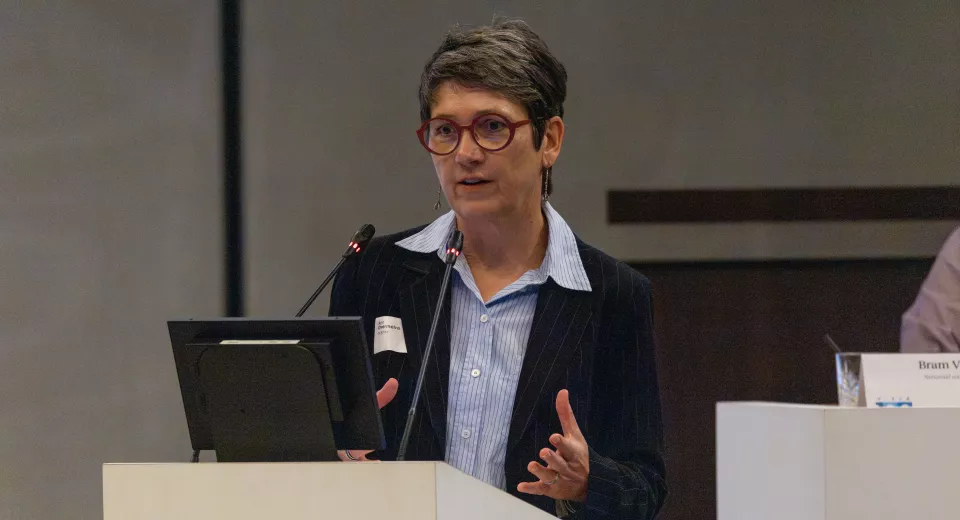
On behalf of Blue Cluster, COO Ann Overmeire brought the perspective of the blue economy to the debate. The central question was how Europe can better reconcile its climate ambitions, industrial development and strategic autonomy.
Ann highlighted the economic and societal importance of the blue economy. Through ports, energy production, food supply and maritime transport, the sea plays an essential role for Europe. In recent years, Flanders has also built up a strong position in offshore wind energy, with an extensive value chain of companies that are now active worldwide. In addition, a broad innovation landscape has emerged in fields such as offshore solar energy, nature-based coastal protection, blue biotechnology and aquaculture.
At the same time, pressure on the North Sea is increasing due to climate change, biodiversity loss and growing demand for space at sea. According to Blue Cluster, this calls for an integrated approach in which energy, nature, security and economic activities are no longer considered separately.
An opportunity for an integrated approach
During the debate, Blue Cluster also highlighted the importance of the future European Ocean Act. The Act is intended to translate European ocean policy into specific legislation and concrete measures, while offering a unique opportunity to better coordinate the development of Europe’s sea basins.
Blue Cluster advocated strategic planning at sea-basin level, across national borders. This would enable offshore wind farms, grid infrastructure, nature restoration and maritime security to be better coordinated. According to the cluster, the protection of critical offshore infrastructure should also be given a prominent place in European policy.
Offshore wind as an industrial opportunity for Europe
In addition to ocean policy, European industrial policy was also discussed. Blue Cluster emphasised that offshore wind is now a mature and competitive technology, but that Europe needs to make greater efforts to retain its economic added value within the region.
The Net-Zero Industry Act and the planned Industrial Acceleration Act can play an important role in this respect. According to Blue Cluster, these instruments should ensure that investments in production capacity, supply chains and innovative technologies are more firmly anchored in Europe. This will not only contribute to climate objectives but also strengthen the competitiveness of European industry and reduce dependence on other regions.
Moreover, economic activities at sea do not have to come at the expense of a healthy marine ecosystem. By integrating nature considerations from the design stage onwards, offshore infrastructure and new technologies can actually create opportunities to support biodiversity and strengthen ecosystems. In this way, the economic and ecological ambitions for the North Sea can go hand in hand.
Three recommendations for policymakers
During the debate, Blue Cluster put forward three concrete recommendations for Flemish and European policymakers:
- embed strategic planning for each sea basin in the future Ocean Act;
- accelerate permitting procedures and strengthen incentives for European production capacity in offshore wind;
- ensure coherent industrial, energy and climate policies so that offshore wind, electrification and industrial development reinforce one another.
Dialogue between industry and policymakers
The Great Flemish Europe Debate once again brought together a broad group of Flemish stakeholders and policymakers to discuss Europe’s future. The discussions made clear that strategic autonomy is not only a geopolitical challenge but also affects innovation, industry, energy supply and sustainable economic development.
For Blue Cluster, the debate provided a valuable opportunity to highlight the importance of the blue economy and emphasise the opportunities offered by the European Ocean Act and a stronger European industrial policy. This can enable Europe not only to achieve its climate objectives but also to strengthen its economic resilience and strategic position.
Who took part in the debate?
The panel brought together representatives from various Flemish sectors around the theme of strategic autonomy as a geopolitical necessity:
- Caroline Ven (pharma.be) on security of medicine supply and innovation
- Luc Van den hove (imec) on technological innovation and scaling up
- Cas König (North Sea Port) on energy infrastructure and energy security
- Frank Beckx (Voka) on industrial competitiveness and the single market
- Ann Overmeire (Blue Cluster) on the blue economy, offshore wind and the European Ocean Act
Their contributions formed the basis for the debate with Flemish and European policymakers from various political parties.