SUSANA closing event shows opportunities for alternative sand sources


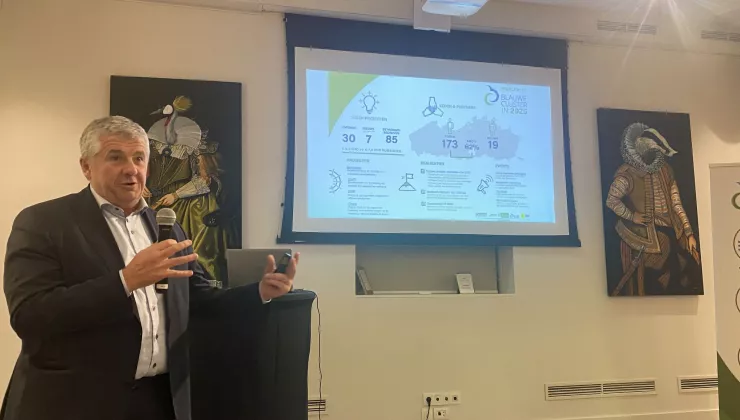
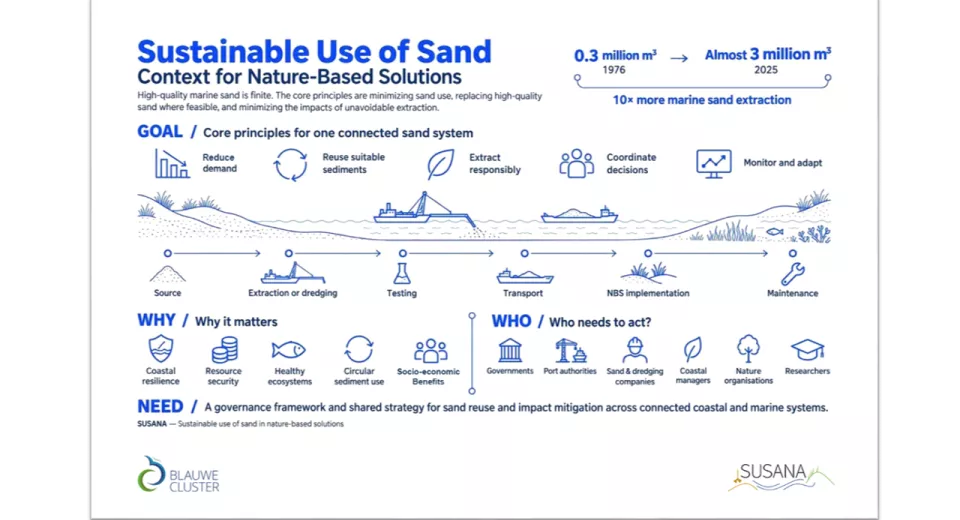
On 30 September, researchers, businesses, government bodies and other stakeholders gathered in Bruges for the closing event of the SUSANA project. The central question was how to secure sufficient sand for future coastal protection measures without further increasing pressure on marine ecosystems.
During the event, the key research findings were presented, complemented by international insights from the Netherlands. Attention was also given to the challenges and opportunities involved in the further implementation of nature-based solutions.
Alternative sand sources offer prospects
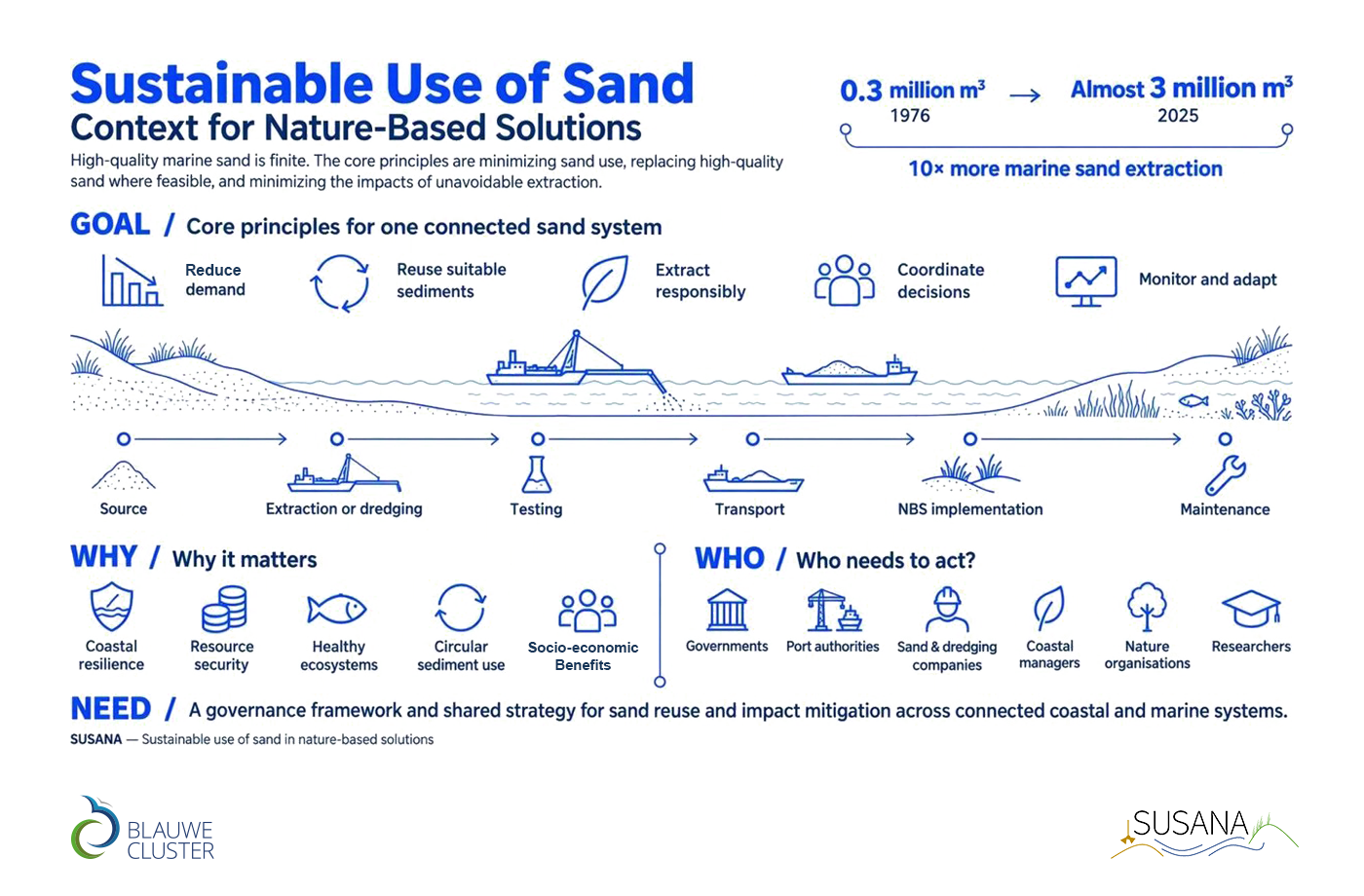
Nature-based solutions are playing an increasingly important role in future coastal management. Dunes, beach nourishments and other natural forms of coastal protection provide protection against flooding while also benefiting nature, recreation and the climate. However, these solutions require large quantities of sand.
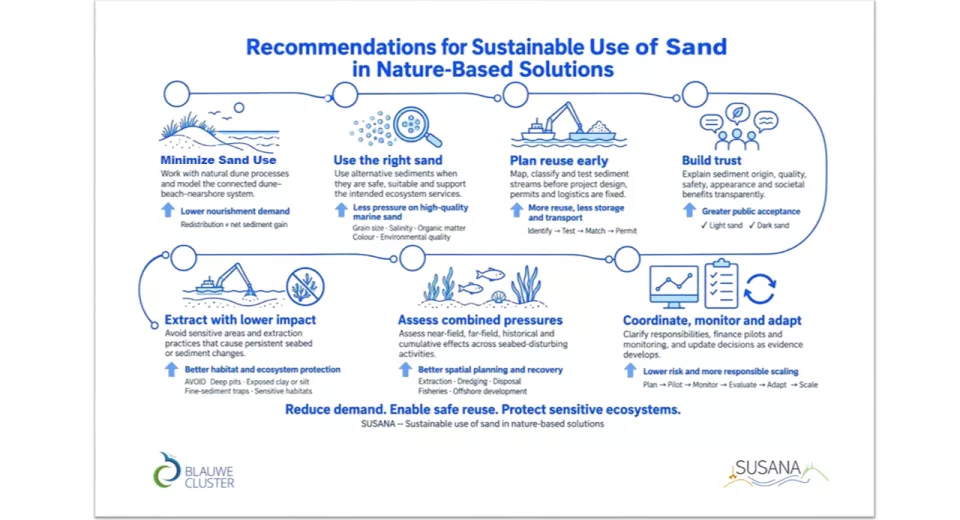
Within SUSANA, researchers therefore examined the extent to which alternative sediments, such as material from dredging operations or infrastructure projects, can be used in coastal projects. The results show that dune vegetation can develop successfully on such sediments as well. In some cases, even better growth was observed than on traditional sand.
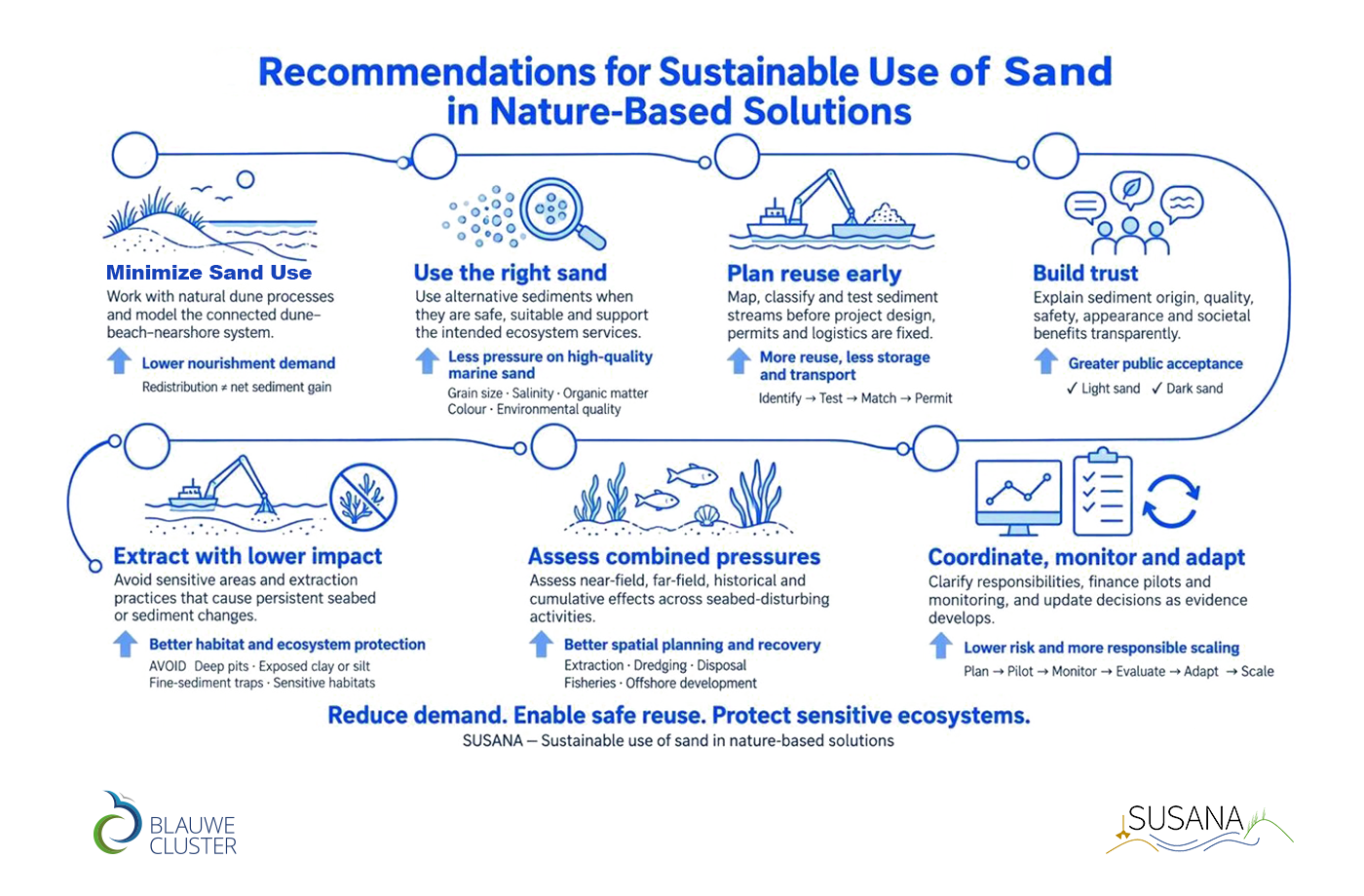
The researchers do emphasise that local conditions play an important role. Characteristics such as grain size, salinity and organic matter content help determine how suitable a sediment is for a specific application.
The research into erosion resistance also yielded positive insights. The presence of vegetation appears to have a greater influence on the resistance of dunes to erosion than the distinction between conventional and alternative sand sources. Only very fine sediments show a clearly higher susceptibility to erosion.
In addition,there appears to be public support. A survey revealed that recreational users are open to the use of more sustainable sand sources, provided that clear communication is provided about them.
Reuse of sediments requires organisation
SUSANA also investigated which alternative sources of sand and sediment are available for future use. This included materials such as dredged sediment and material originating from port and infrastructure works.
The results show that several sources offer potential for reuse. The greatest challenge lies not so much in the availability of material, but in better matching supply and demand. A well-considered approach to storage, planning and logistics is essential for making efficient use of these materials.
Better understanding the impact of sand extraction
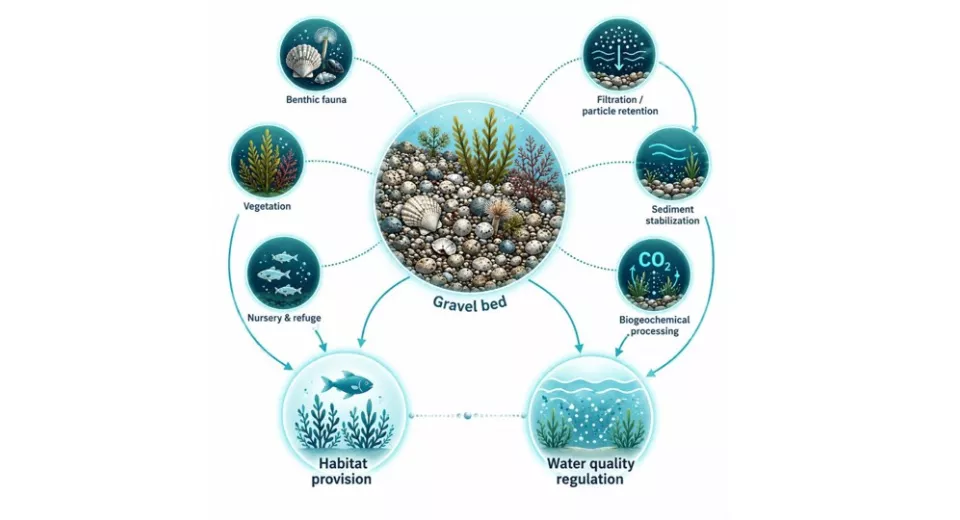
In addition to alternative sand sources, the project also mapped the ecological impact of offshore sand extraction. The results show that the effects are highly dependent on local conditions.
Sand extraction influences the composition of life in and on the seabed. Some organisms adapt well to these changing conditions, while others come under pressure. The interactions between organisms and natural ecosystem processes also change.
The project also examined the combined impact of different activities at sea, such as sand extraction, dredging and fishing. Sensitive habitats in particular deserve special attention. Risk maps developed within the project can help policymakers make better-informed decisions regarding future activities and monitoring.
The researchers therefore recommend that future sand extraction should take into account not only technical or economic criteria, but also the sensitivity of existing ecosystems.
A model for better-informed decisions
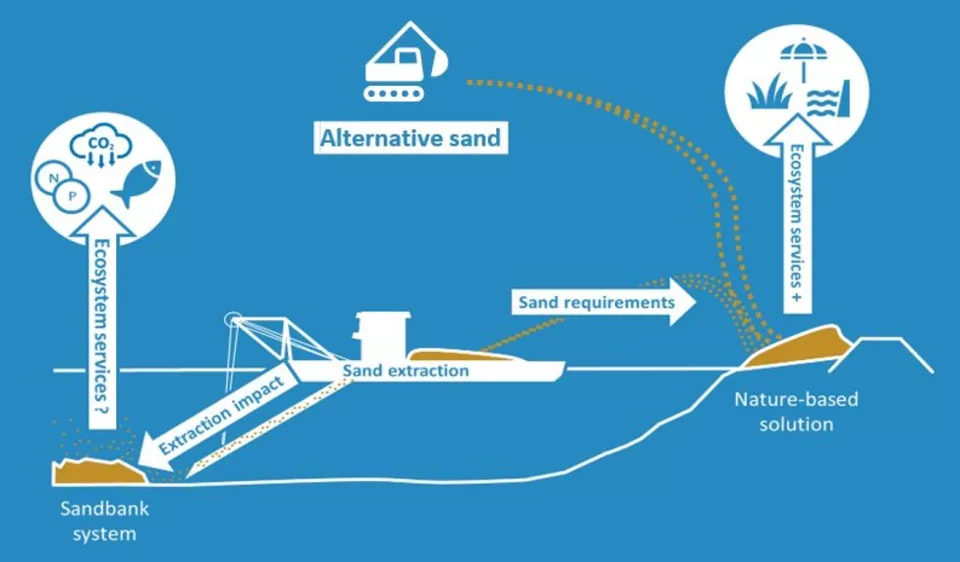
To bring together the project's findings, SUSANA developed an integrated model that considers ecosystem services on land and at sea. The model helps visualise how different choices regarding sand extraction and sand use may affect coastal safety, nature, recreation and fisheries.
The aim is not to weigh positive effects along the coast against negative effects at sea, but rather to provide insight into the potential consequences of different choices and thereby enable better-informed decision-making.
From research to application
The closing event also looked ahead to the next steps. International speakers shared experiences from the Netherlands regarding ecologically smart sand extraction and the scaling up of nature-based solutions.
The final discussion highlighted that a wealth of knowledge is already available, but that further practical experience remains necessary. Various participants therefore called for large-scale demonstration projects in which technical, ecological, logistical, regulatory and governance challenges can be tested together.
SUSANA provides an important foundation for this. The project brings together new knowledge, practical recommendations and tools that can contribute to a sustainable and future-oriented development of our coastline.
Would you like to learn more about the results of this project? Please contact Kristien Veys.
Acknowledgements
The project partners thank everyone who contributed to the SUSANA project and participated in the closing event. The knowledge and insights gained provide a strong foundation for the further development of nature-based solutions and sustainable coastal protection.