ULTFARMS
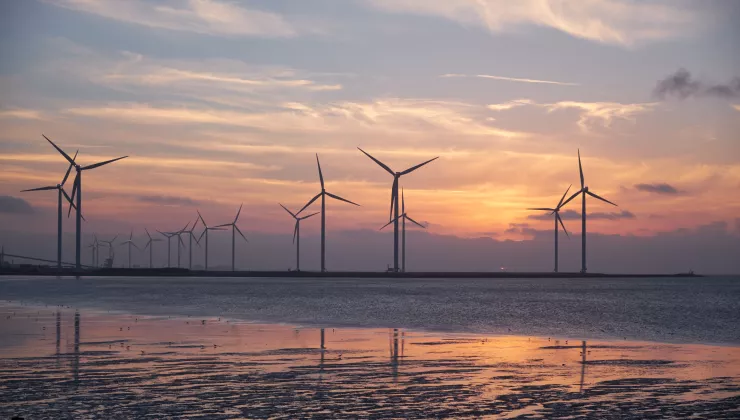
By combining different activities at sea, ULTFARMS aims to contribute to a more efficient and sustainable use of marine space. The project therefore explores how aquaculture can be integrated into offshore wind farms.
The focus lies on low-trophic aquaculture: the cultivation of organisms low in the food chain, such as seaweed, mussels and oysters. These species have a limited ecological impact and obtain their nutrients directly from the surrounding environment.
Objectives
ULTFARMS aims to accelerate the development of sustainable offshore aquaculture by developing new technical, ecological and operational solutions for production in offshore wind farms. The project focuses on:
- combining aquaculture with offshore wind energy (multi-use of marine space);
- developing innovative cultivation systems suitable for offshore conditions;
- improving ecological sustainability and reducing the carbon footprint;
- creating economically viable value chains for low-trophic species.
The project seeks to demonstrate that sustainable production of seaweed and shellfish is feasible within offshore wind farms and can contribute to a future-proof blue economy.
Implementation
Within ULTFARMS, six pilot projects are being developed in offshore wind farms in the North Sea and the Baltic Sea. These demonstrations test new cultivation technologies and operational models for offshore aquaculture. The pilots are located in:
- Belwind (Belgium);
- Borssele (the Netherlands);
- FINO2 and FINO3 (Germany);
- Anholt and Samsø (Denmark).
The pilots cover the entire value chain, from the design and installation of cultivation systems to monitoring, production and market development. The knowledge generated will lead to replicable models for aquaculture in offshore wind farms across Europe.
Partners: Deltares (co-ordinator), Hortimare BV, OOS Group and Wageningen University & Research (Netherlands); Flanders Marine Institute, Ghent University, Jan De Nul Group, Parkwind and Royal Belgian Institute of Natural Sciences (Belgium); Blå Biomasse A/S, Danmarks Tekniske Universitet, Ocean Rainforest and Ørsted (Denmark); DNV, Kieler Meeresfarmis GmbH and Sustainable Aquaculture Solutions bbe Moldaenke GmbH (Germany); Bantry Marine Research Station Ltd and Impact-9 (Ireland); HIDROMOD (Portugal); Technological Corporation of Andalusia (Spain); as well as Nordic SeaFarm and University of Gothenburg (Sweden).
Blue Cluster's role: Blue Cluster is part of the Internal Advisory Board (IAB) and contributes to the strategic follow-up and knowledge exchange within the project.
With financial support from: European Union via Horizon Europe
Contact: Jurgen Adriaen